

I first wrote the booklet about early Native American homes because I could not find something simple for a brief introduction to Native Americans for my son. I wanted him to understand that there was a variety of cultures living on the American continent before Europeans arrived. I wanted him to understand that the vastness of the country meant that not every American Indian lived in a tipi. The various landscapes of America meant that the various groups of people also lived very differently.
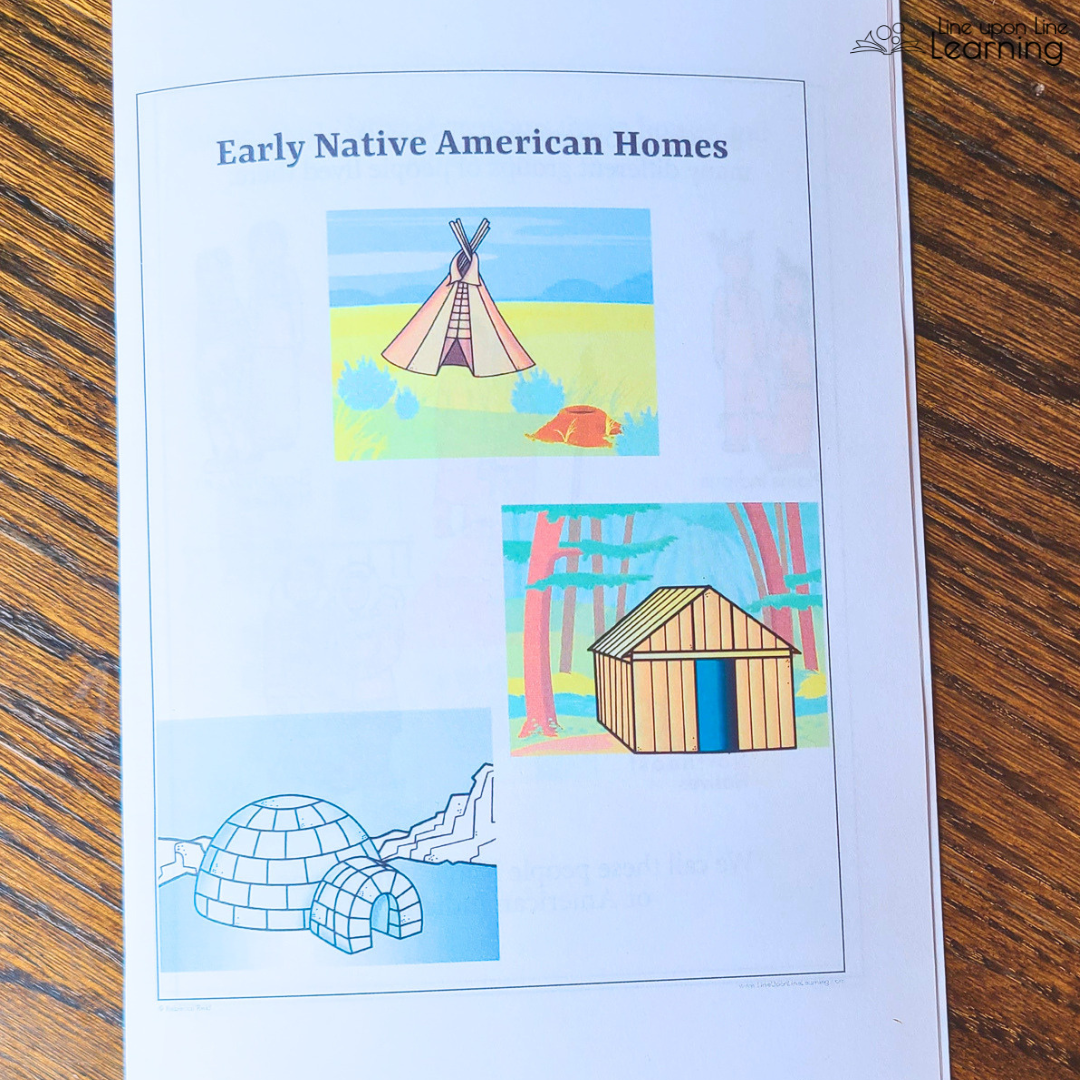
Reading and Understanding Early Native American Homes
As I said, I could not find an appropriate picture book for my son back then that shared that kind of information. So I wrote one with the information I wanted to share.
To go along with the booklet, I created some printable pages for an introductory research project (for older kids) and comprehension (for the most basic approach to the subject). I think it turned out so beautiful in the end.
It is right at a second or third grade level to read the booklet, complete the comprehension questions, and write a little about the Native American homes.

A Simplified Native American Homes Booklet
But, I also realized that kindergartners did not read and write at that level. My son was a strong reader, but he was not a strong writer. For my younger daughter, I made a younger version, which covers just five homes and provides pages with a simple sentence, the name of the home to trace in print, and images to paste on the page for the type of home mentioned.

My preschooler was s a bit too young for the full-length booklet. I shared the lower level read, trace, and paste pages for her. With my help, she loved gluing and matching activities!
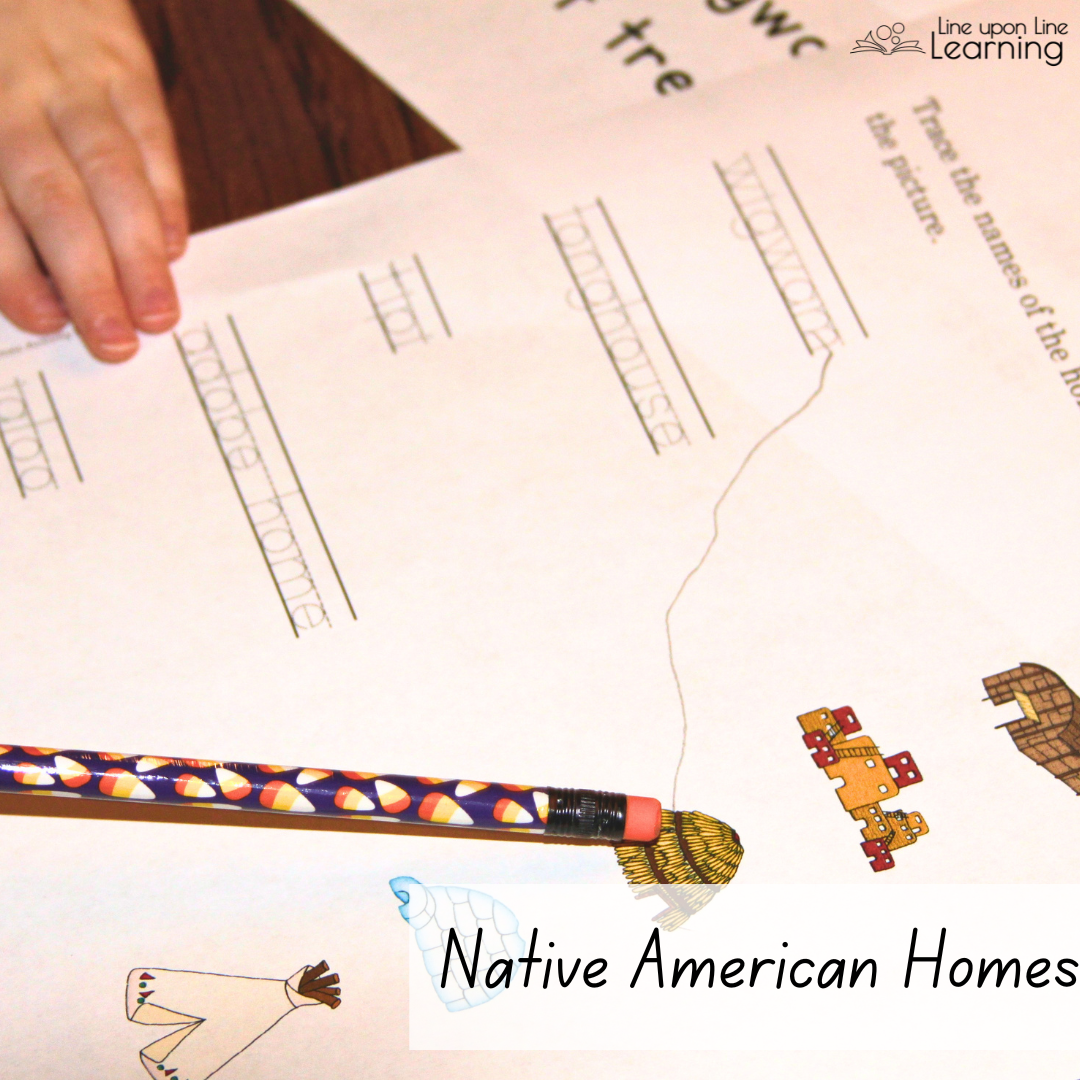
Extending Native American Homes into a STEM Project
Using some craft supplies, we added a STEM element to our Native American Home study. This is perfect for our homeschool co-op! Whenever you think of an architectural element, like a house, you can always make it into a STEM project.

Here are some easy supplies I mention on the brainstorming pages:
- tipi: dowels, pipe cleaners, rubber bands, felt
- wigwam: pipe cleaners, raffia, brown paper, yarn, tape
- chickee: craft sticks, raffia or straw, paper strips
- wattle-and-daub: pipe cleaners, twigs or craft sticks, play-doh
- longhouse: craft sticks, cardboard, pipe cleaners, raffia, felt, tape, glue
- plank house: craft sticks, tape or glue, clothespins
- birchbark house: cardstock of construction paper, paper bags, craft sticks, yarn, tape or glue
- igloo: sugar cubes or mini-marshmallows, glue
- adobe home: clay or play-doh
How could we adapt natural materials to make the other homes?
Get Early Native American Homes
Help students explore how Native American peoples built homes that fit their environments with this engaging informational resource. Students will learn about nine traditional Native American homes, discover where they were used, and understand how geography, climate, available materials, and lifestyle influenced their design.

