
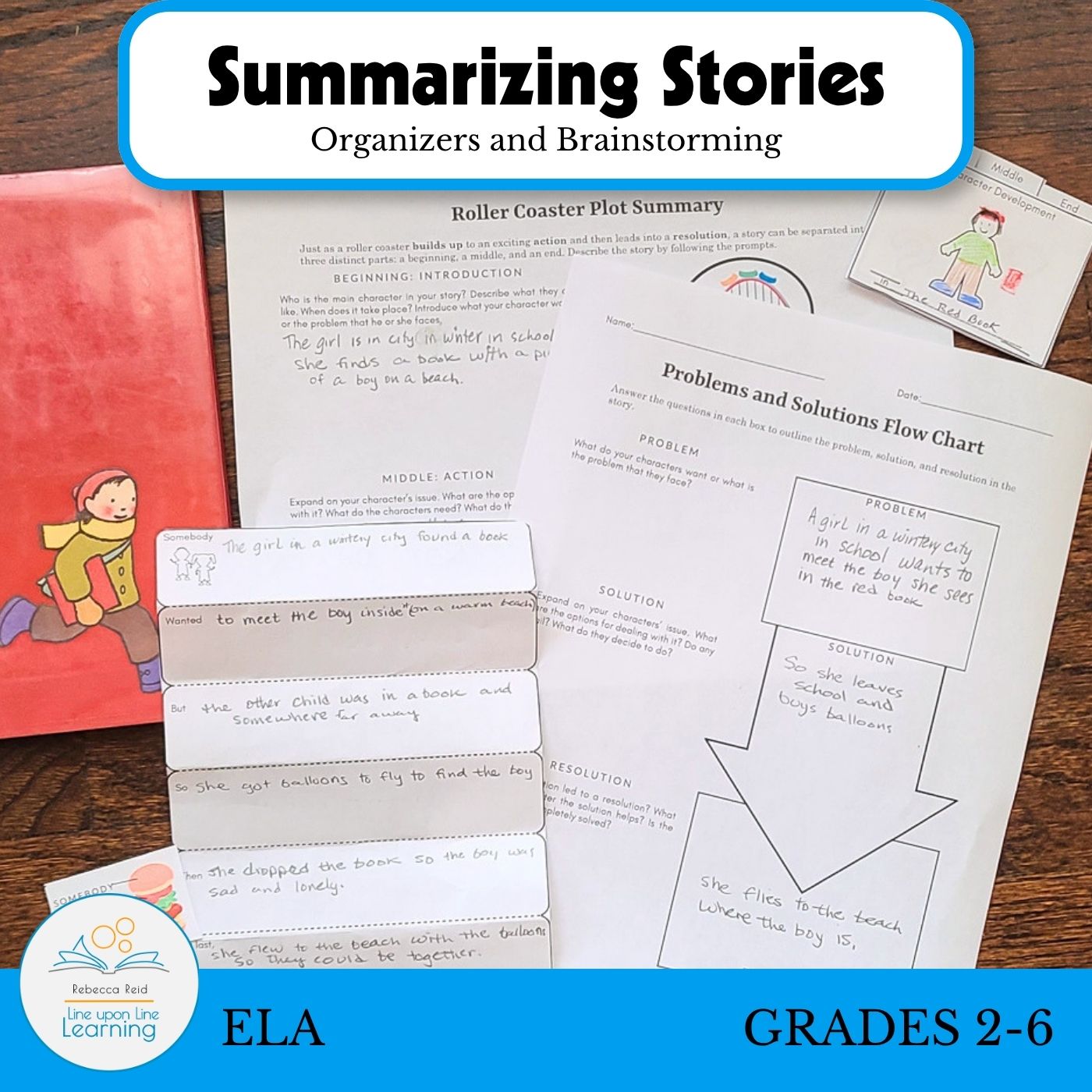


Use these pages to respond to literature by brainstorming and summarizing stories.
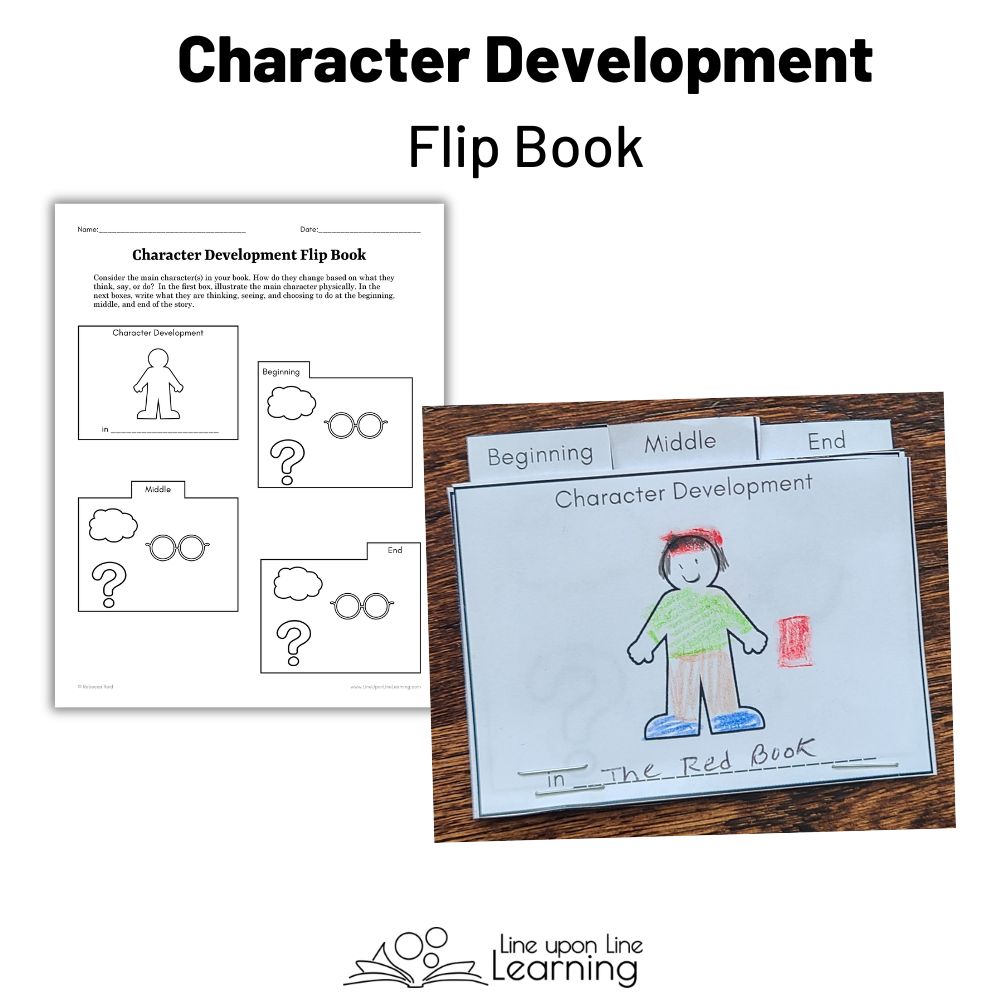
Character Development Flip Book. On this page, I’ve provided a flip book template with four pages: a cover to illustrate who the character is (either physically or internally) and three page from beginning to end. Each has images to represent what the character is thinking, seeing, and asking.
Roller Coaster Story. Just as a roller coaster builds up to an exciting action and then leads into a resolution, a story can be separated into three distinct parts: a beginning, a middle, and an end. Describe the story by following the question prompts. The charts are for review and the brainstorming pages are for analysis practice.
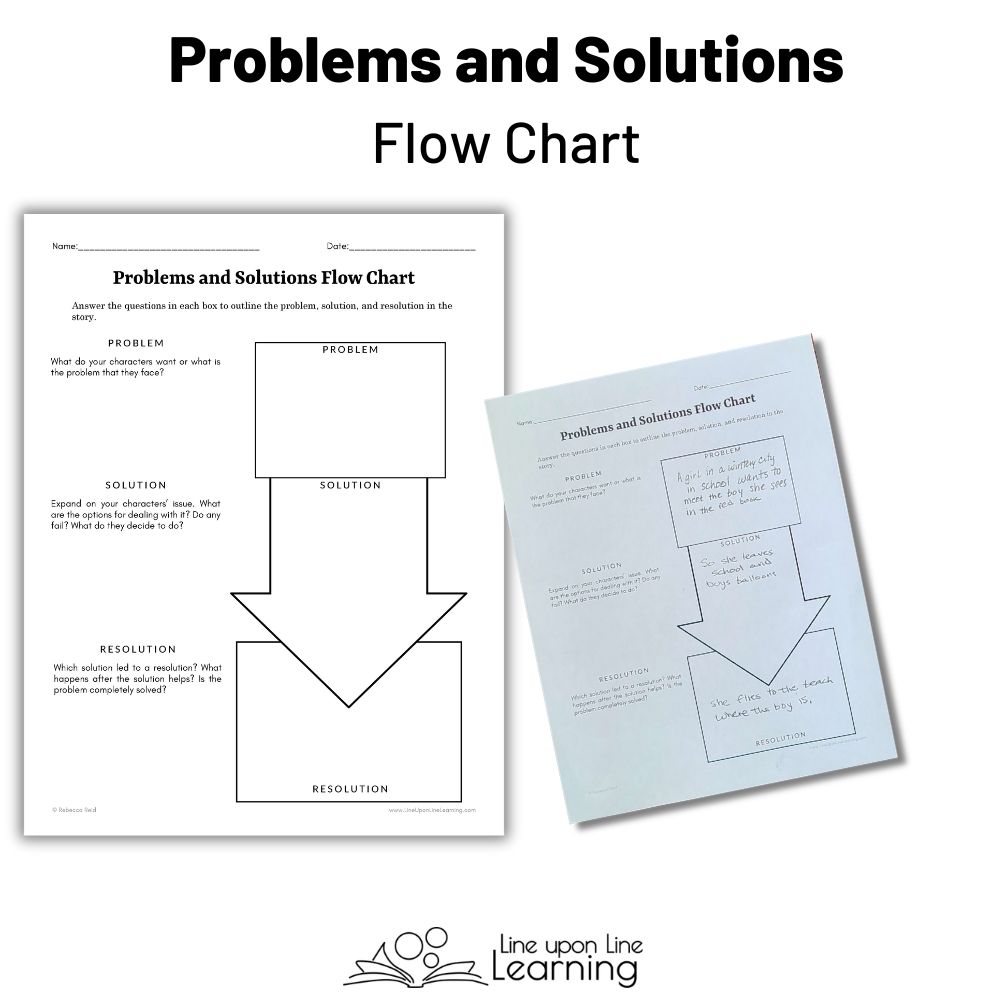
Problem and Solution Flow Chart. This brainstorming page emphasizes cause and effect, leading from problem to solution to resolution. The questions can help one think critically on how one issue leads to the next.
Hamburger Stories. Use the prompts to explain a story: Somebody wanted but so then at last.


